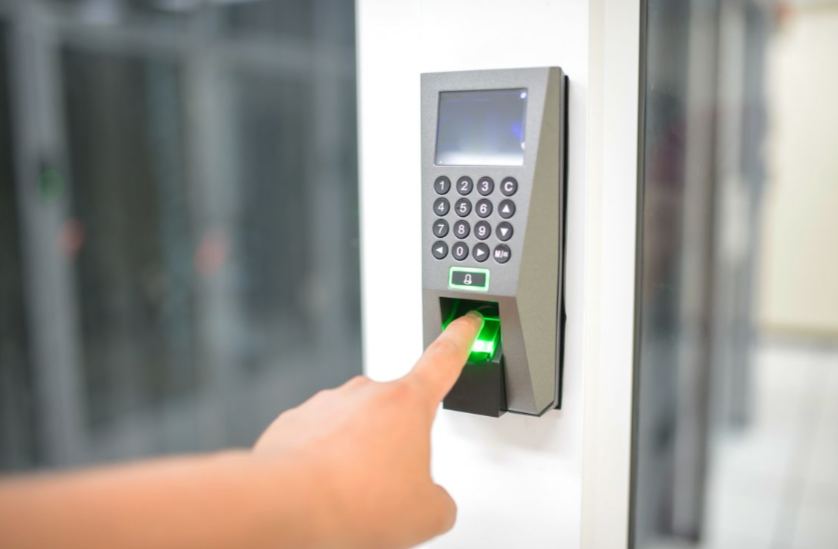
Qatari business leaders are no longer asking whether to replace paper sign-in sheets with biometric attendance. That decision was settled years ago. The question on the table today is sharper and more interesting. Should the organisation deploy fingerprint readers, facial recognition, or some combination of both? The answer depends on the environment, the workforce, the budget, and the operational priorities. The trade-offs are real. A well-chosen biometric attendance system in Qatar can pay for itself within the first payroll cycle. A poorly chosen one creates friction at every shift change. This piece walks through the practical comparison so decision-makers can match the technology to the business rather than the other way around.
Accuracy in Qatar’s Operating Conditions
Qatar’s climate is the first thing to consider. Summer surface temperatures inside un-airconditioned spaces can damage cheap electronics, and dust storms test even well-specified hardware. Modern fingerprint readers used in a fingerprint attendance system tolerate these conditions well, with sealed sensors and industrial enclosures designed for the Gulf. However, fingerprints become harder to read on hands that are constantly washed, cut, or worn, which is a real issue in kitchens, construction, and clinical environments. A face recognition attendance system avoids that problem entirely. Multi-spectral facial recognition handles glare, partial shading, and even masked faces, which matters across healthcare and food-handling work. Independent testing published by the NIST Face Recognition Vendor Test has confirmed that leading facial recognition algorithms now exceed human accuracy under most operating conditions.

Hygiene Considerations Across Sectors
Hygiene became a procurement criterion during recent global health events, and it has stayed there. A face recognition attendance system in Qatar is fully touchless, which is why hospitals, dental practices, and food production sites increasingly default to it. Fingerprint readers involve contact, but modern devices use antimicrobial sensor coatings and self-cleaning surfaces that meet most health-and-safety standards. For most office environments, fingerprint is perfectly acceptable. For clinical and food-handling environments, facial recognition is now the clear standard. Guidance from the World Health Organization on infection prevention has consistently encouraged reducing high-touch surfaces wherever practical, which has shaped specification decisions across Qatar’s healthcare estate.
Integration with Qatar Payroll Systems
Hardware is only half the equation. The other half is whether the attendance data flows cleanly into payroll, HR, and ERP systems. A modern biometric time attendance system speaks a common language through APIs, scheduled exports, or direct database integration, which means hours captured at the reader become payroll entries without manual intervention. This is where many organisations save the most money. An employee time attendance system that requires HR to re-key data is not a modern system. Whether the underlying credential is fingerprint or face recognition matters less than whether the platform integrates cleanly with the broader HR stack. The leading deployments treat clean integration as the first specification criterion rather than an afterthought.
Total Cost of Ownership Across Sectors
Initial hardware cost generally favours fingerprint. A fingerprint terminal costs less per door than a facial recognition unit, and at scale, that gap matters. However, the total cost of ownership tells a different story across multi-year deployments. Facial recognition reduces enrolment time, eliminates touch-related sensor wear, and supports walk-through deployment that improves throughput. For high-traffic locations like hospital lobbies, large factory gates, or hotel staff entries, the throughput gain alone often justifies the higher unit cost. A cloud-based attendance system that supports both modalities allows the organisation to mix and match per location rather than locking into a single technology across every site.
Matching the Technology to the Sector
Different sectors lean toward different answers. Construction and industrial operations in Qatar continue to favour fingerprint because the workforce is large, conditions are harsh, and the per-unit budget matters at scale. Hospitality groups often combine fingerprint for back-of-house staff with facial recognition at executive and front-of-house entries. Healthcare leans heavily toward facial recognition because of touch and PPE considerations. Office environments and financial institutions increasingly default to facial recognition as part of broader passwordless strategies. A smart attendance system that supports both modalities under one management console gives operators the flexibility to deploy whichever credential is right at any given location without managing two parallel platforms.
The Right Question to Ask
The most useful framing is not which technology wins in the abstract. It is which technology wins for a specific location, workforce, and use case. A biometric attendance machine deployed at a busy hotel kitchen has different requirements from one installed at a corporate executive entry. The organisations that get this right deploy a mix, manage it under one platform, and treat the technology choice as a per-site decision rather than a company-wide mandate. That is the operational maturity Qatar’s leading employers have learned to bring to attendance infrastructure.
Organisations weighing fingerprint against face recognition can speak to the team at Adax Business Security Systems for a tailored assessment. The right biometric attendance system in Qatar depends on the organisation’s environment, workforce, and operational priorities, and the Adax BS team helps clients identify the deployment that fits each location’s needs.
