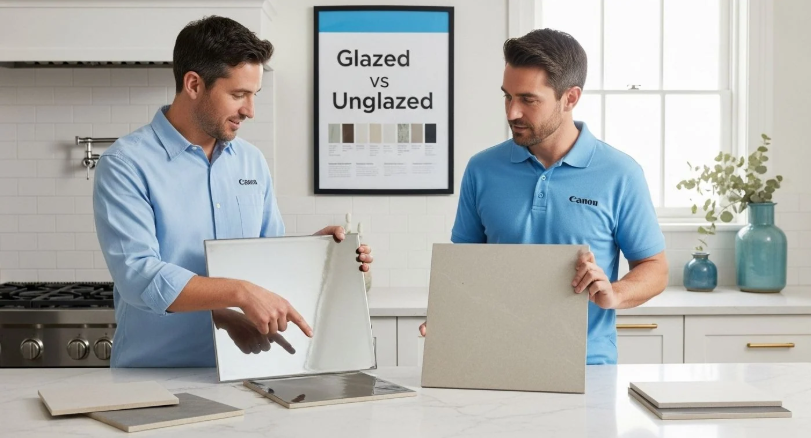
Picture a busy restaurant, a hotel lobby, or a shopping center: the floor is constantly under assault from shoes, carts, and cleaning equipment. Choosing the right surface is more than an aesthetic choice—it’s a question of how long that floor will last before showing signs of wear. For commercial spaces, the debate often centers on glazed vs unglazed Ceramic Tile, with each offering distinct advantages and drawbacks. In high-traffic scenarios, understanding how these two tile types differ in construction, durability, safety, and upkeep can be the difference between a floor that stands the test of time and one that quickly needs replacement.
Manufacturing Differences Between Glazed And Unglazed Ceramic Tiles
The core distinction between glazed and unglazed options lies in their finish. Glazed tiles receive a glass-like coating fired onto the tile surface during manufacturing, which allows for a wide range of colors, textures, and patterns. This layer not only creates a decorative finish but also acts as a shield against stains and moisture. In contrast, unglazed varieties are solid throughout, with the color and pattern running through the entire thickness of the tile. This through-body composition means chips or scratches are less visible, which can be a practical advantage in high-traffic commercial installations.
For example, a retail store with a light-colored floor might favor unglazed flooring to mask surface wear. The differences in production affect not just appearance but also properties like hardness, porosity, and resistance to abrasion. Comparing how glazed and unglazed tiles are made reveals why each responds differently to the rigors of foot traffic.
Durability And Wear Resistance Under Heavy Commercial Foot Traffic
Commercial environments put flooring through continuous stress, making resistance to scratching and chipping a top priority. Unglazed tiles, with their thicker, uniform body, excel in settings such as airports or shopping centers, where even minor surface damage can be common. Since the color and texture are consistent throughout, signs of surface wear blend in, helping the floor maintain its appearance over time.
Glazed tiles, on the other hand, rely on a protective coating that can wear down in high-traffic areas, especially when exposed to abrasive materials like sand or grit. Once this surface layer erodes, the underlying clay becomes vulnerable to staining and further damage. However, certain varieties, such as those labeled for heavy commercial use, feature highly durable glazes engineered to withstand intense wear.
When specifying Ceramic Tile for a hotel corridor or retail entryway, many designers choose unglazed options for their resilience. These products deliver the kind of long-term durability essential for business floors.
Slip Resistance And Safety Factors In High Traffic Spaces
Safety is a critical concern where hundreds or thousands pass daily. Unglazed tiles are typically left with a matte, textured surface that provides better slip resistance, especially when wet. This makes them a common choice for entryways, locker rooms, and commercial kitchens, where accidental spills are frequent and the risk of slipping must be minimized.
Conversely, glazed versions can range from glossy to semi-matte finishes. While a high-gloss coating offers a striking look, it can become slippery underfoot, particularly in areas exposed to water. Some glazed models incorporate grit or micro-textures into the surface to boost slip resistance, but these finishes may still fall short in environments where safety standards demand the highest level of traction.
Building codes often reference slip resistance requirements for commercial flooring, guiding architects and facility managers to prioritize safety alongside style in glazed vs unglazed Ceramic Tile selections.
Maintenance Requirements And Longevity For Business Interiors
Ongoing upkeep is another point of differentiation. Glazed tiles are generally easier to clean because their slick surface repels stains and does not absorb liquids. This makes them a practical option for restaurants or cafes where spills are frequent and fast cleanup is essential. The downside: if the glaze becomes scratched or worn, it is not possible to refinish or restore the original surface sheen.
Unglazed tiles are more porous, so they may need to be sealed upon installation and resealed periodically to prevent staining from oils, dyes, or tracked-in dirt. However, because their color runs through the entire tile, scratches and chips are less noticeable, which can extend the visual life of the floor even in harsh commercial settings.
Choosing the right tile for a business interior means balancing ease of maintenance with the expected volume and type of traffic. In some cases, combining both finishes in different zones—glazed in low-traffic display areas, unglazed in entrances or corridors—offers the best mix of appearance and function.
Conclusion
For commercial spaces expecting heavy traffic, unglazed Ceramic Tiles consistently deliver greater wear resistance and slip safety, especially in environments where durability and traction take precedence over decorative variety. Before making a final selection, assess the specific needs of each space—entryways, corridors, and wet areas may benefit from the extra grip and uniform color of unglazed options, while glazed finishes can be used where easy cleaning and vibrant design matter most.
