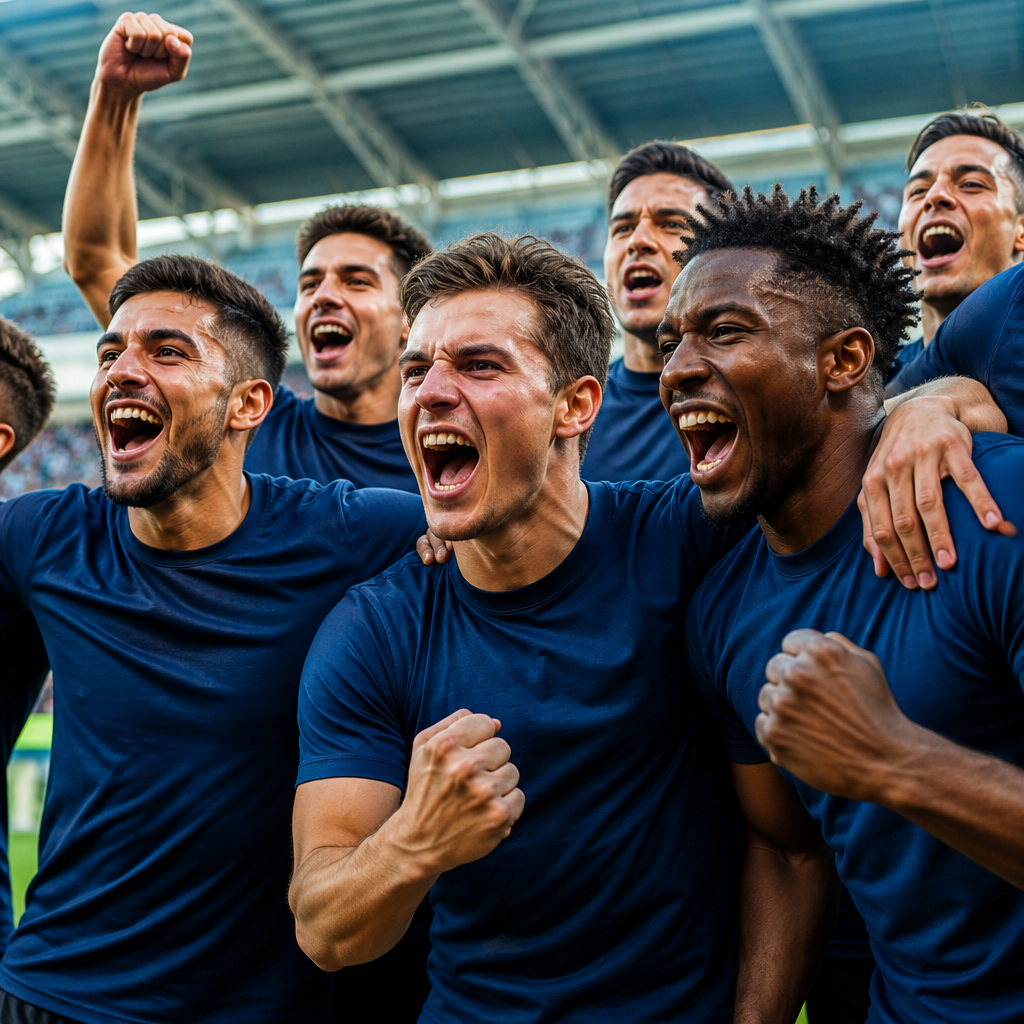
There is something deeply personal about wearing a shirt that was made specifically for you, your team, or your community. Custom t-shirts have evolved far beyond simple screen-printed novelties. Today, they represent identity, unity, and a tangible connection to something larger than the individual. Whether you are outfitting a local soccer league, rallying fans behind a college team, or building a brand around a sports blog, the right custom tee does more than cover your back — it tells a story. And in a world where visual identity matters more than ever, that story needs to be told well.
The Intersection of Sports Culture and Custom Apparel
Sports culture has always been inseparable from clothing. From the earliest days of organized athletics, uniforms and fan gear have served as symbols of allegiance and pride. What has changed dramatically in recent years is how accessible custom apparel has become. You no longer need a corporate budget or a minimum order of five hundred units to get a professionally designed, high-quality custom shirt. Small teams, independent fan clubs, and even individual content creators can now produce shirts that look and feel as polished as anything you would find in a major retail store.
This shift has had a profound effect on how sports communities build and sustain their identities. A local rugby club can now have the same visual cohesion as a professional franchise. A fantasy football league can create matching shirts for their annual draft day. A sports blogger can sell branded merchandise to their audience without investing in a warehouse full of inventory. The barriers have come down, and the creative possibilities have expanded enormously.
Fan Engagement Goes Beyond the Screen
Digital platforms have transformed how fans consume sports content. Match highlights, live commentary, and in-depth analysis are now available around the clock, and audiences have developed sophisticated tastes for how that content is delivered. As explored in this piece on how sports pages shape modern reading habits, the way fans engage with sports media has fundamentally changed their expectations for depth, speed, and personalization. That same expectation now extends to merchandise. Fans want gear that reflects their specific community, their inside jokes, their team’s unique culture — not generic apparel that could belong to anyone.
Custom t-shirts fill that gap perfectly. They are tangible, wearable expressions of the same identity that fans build online. When a fan wears a shirt that references a specific moment from their team’s history or features artwork created by a community member, it deepens their connection to the group in a way that no digital interaction can fully replicate.
Design Principles That Make Custom Tees Work
Not all custom t-shirts are created equal. The difference between a shirt that gets worn repeatedly and one that ends up at the back of a drawer often comes down to a few key design decisions. First, simplicity tends to win. A clean, bold graphic with a limited color palette will almost always outperform a cluttered design that tries to say too much. Second, the placement of the design matters. A centered chest graphic reads differently than a left-chest logo or an all-over print, and each choice sends a different signal about the shirt’s purpose and audience.
Typography is another area where custom shirts frequently succeed or fail. Fonts carry personality, and the wrong font can undermine an otherwise strong design. A sports team shirt with an elegant serif font may feel mismatched, while a casual fan tee with an aggressive display typeface might come across as too intense. The best custom shirt designs feel inevitable — as if no other choice could have been made.
Fabric and Fit: The Details That Define Quality
Beyond the visual design, the physical quality of a custom t-shirt determines whether it becomes a wardrobe staple or a one-time wear. Fabric weight, softness, and construction all play significant roles. A heavier cotton blend tends to hold its shape better over time and feels more substantial, while a lighter tri-blend fabric offers a vintage, worn-in feel that many people prefer. For sports-specific applications, moisture-wicking performance fabrics are worth considering, especially for shirts that will be worn during activity rather than just as fan apparel.
For those looking to understand how custom tees and polos can be styled for different occasions and body types, resources like this guide to custom tees and polos for men offer practical, well-considered advice that goes beyond basic sizing charts. Understanding fit in relation to personal style helps ensure that custom shirts are actually worn and appreciated rather than simply distributed and forgotten.
Fast Shirt Factory: Built for Teams That Move Quickly
When it comes to producing custom t-shirts without sacrificing quality or waiting weeks for delivery, the production partner you choose makes all the difference. Fast Shirt Factory has built its reputation around exactly this challenge — delivering professionally printed custom shirts on timelines that actually work for real teams, events, and organizations. Whether you need fifty shirts for a weekend tournament or several hundred for a season-long campaign, their process is designed to move efficiently without cutting corners on the finished product.
What sets a reliable custom shirt producer apart is not just speed, but consistency. Every shirt in an order should look identical to the proof, with colors that match expectations and prints that hold up through repeated washing. For sports teams and fan communities, inconsistency in merchandise is more than an aesthetic problem — it undermines the sense of unity that the shirts are meant to create in the first place.
Ordering Smart: Planning Your Custom Shirt Run
One of the most common mistakes organizations make when ordering custom shirts is underestimating demand. It is almost always better to order slightly more than you think you need than to run short. Reorders, while possible, often come with additional setup costs and longer lead times. Planning your size distribution carefully is equally important — most groups skew their orders too heavily toward smaller sizes and end up short on larger ones.
Communicating clearly with your production partner about your timeline, your design files, and your expectations before the order is placed will prevent the majority of problems that arise during the process. Providing print-ready artwork in the correct format and resolution eliminates back-and-forth delays and ensures that what you see in the proof is what you receive in the box.
Conclusion: Custom Shirts as Community Infrastructure
Custom t-shirts are not just merchandise. For sports teams, fan communities, and content creators, they are infrastructure — a physical layer of identity that reinforces belonging and makes abstract community bonds concrete. When designed thoughtfully, produced with care, and distributed strategically, a custom shirt can become one of the most powerful tools a group has for building cohesion and visibility. The investment is modest. The return, measured in loyalty, recognition, and shared pride, is anything but.
