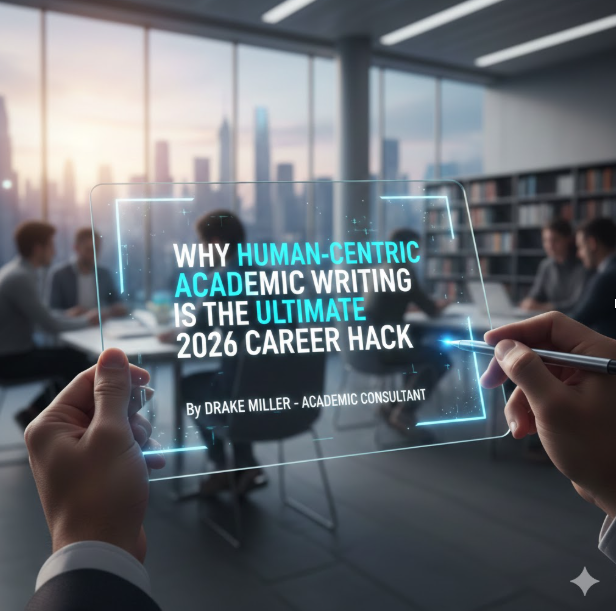
By Drake Miller – Academic Consultant
For high school students and undergraduates, academic writing often feels like a hurdle to clear—an endless cycle of essays and lab reports required solely for a grade. However, in an era where AI can generate text in seconds, the ability to think and write critically has become the ultimate competitive advantage for students entering the US workforce.
In the modern, globalized job market, the ability to articulate complex ideas clearly is one of the most valuable academic writing skills for a resume. Whether you are aiming for a career in law, engineering, or healthcare, your writing serves as a direct reflection of your critical thinking and professionalism.
1. The Gateway to Critical Thinking and Analytical Skills
Academic writing is about the structural organization of thought. To write a successful research paper, a student must evaluate sources and synthesize information. US employers consistently prioritize “soft skills,” with critical thinking ranking at the top.
When you practice academic writing—whether independently or with guidance from the best assignment help online — you are training your brain to:
- Identify biases in data—essential for market analysis.
- Connect disparate ideas into a cohesive narrative for stakeholders.
- Anticipate counter-arguments, a core necessity in corporate strategy.
2. Establishing Professional Credibility in a Digital World
In 2026, your first interaction with a potential employer is almost always written. From your LinkedIn profile to the initial introductory email, your writing style establishes your “professional brand.”
Strong academic writing teaches the importance of tone and precision. Mastering these elements ensures you don’t make the structural errors that lead a recruiter to discard a resume. Furthermore, the benefits of academic writing in a career include building professional integrity; knowing how to attribute ideas correctly makes you a more reliable and trustworthy employee.
Expert Insight from Drake Miller: “In my years of reviewing early-career applications, the candidates who stand out aren’t just those with the highest GPAs, but those who can argue a position with evidence and clarity. That skill is forged in the library, not the AI prompt box.”
3. Communication in a Remote and Hybrid Workforce
The landscape of work has shifted toward remote and hybrid roles. Internal communication now lives on platforms like Slack and Microsoft Teams. In this environment, the “loudest” person is the one who writes the most effectively.
Academic writing prepares you for this by teaching you to be concise. Professionals who can summarize a project’s progress or explain a technical glitch via email save their companies time and money. For students balancing coursework with career preparation, seeking assignment help Ireland can also strengthen these structured writing skills, ensuring clarity, precision, and professionalism that translate directly into the modern workplace.
4. Mastery of Persuasion: The Business Proposal Foundation
At its core, most academic writing is argumentative. You are convincing a professor that your thesis is valid based on evidence. This is a fundamental business skill. Whether you are a developer requesting a budget or a salesperson pitching a product, you are engaging in persuasion.
5. Bridging the Gap: From Student to Professional
Mastering this skill set doesn’t happen overnight. It requires practice and, often, external mentorship to understand the nuances of high-level discourse.
For students looking to elevate their work, specialized resources that offer academic writing guidance can provide the structural support and clarity needed to transition from “average” to “academic excellence.” By observing professional standards in writing early on, students can better understand how to structure their own thoughts for a global audience.
6. Navigating the “Hidden” Job Market
Many high-level career opportunities are found through networking and thought leadership. Students who excel at writing can distinguish themselves by publishing articles or sharing insights on professional platforms. If you can take a complex topic within your field of study and write an accessible, well-researched piece, you position yourself as an expert.
See also: Fire Risk Assessment for Healthcare and Educational Facilities
Conclusion: Investing in Your Future Self
In a competitive US job market, your ability to communicate effectively is your “X-factor.” It is the tool that will help you land the interview, earn the promotion, and lead the team. Stop viewing writing as a task to be completed and start viewing it as a skill to be mastered.
Frequently Asked Questions
Q.1 Why is academic writing important for my future career?
Academic writing is the training ground for critical thinking and data synthesis. It teaches you how to organize complex information and present it logically—skills that translate directly to writing business proposals, project reports, and executive summaries in any professional field.
Q.2 Can I include academic writing skills on my resume?
Absolutely. Instead of just listing “writing,” highlight specific competencies such as “Evidence-based Research,” “Technical Report Writing,” or “Analytical Synthesis.” These terms signal to recruiters that you can handle data-heavy professional tasks.
Q.3 How does academic writing help in a remote work environment?
In remote and hybrid settings, most communication happens via email, Slack, or project management tools. The discipline of academic writing helps you stay concise and clear, reducing misunderstandings and increasing your efficiency as a digital communicator.
Q.4 Will AI replace the need for me to learn academic writing?
While AI can assist with drafting, it cannot replace human judgment and original thought. Employers in 2026 look for “Human-in-the-loop” experts who can verify facts, identify biases, and provide the strategic “why” behind the data—skills only honed through rigorous academic practice.
Q.5 Where can I find help to improve my academic writing?
Mastering these standards takes time. Many students utilize specialized platforms like Myassignmenthelp to receive structural feedback and learn the professional formatting required to succeed in both university and the workforce.
About the Author: Drake Miller
Drake Miller is an academic consultant and career strategist with over a decade of experience helping students bridge the gap between higher education and professional success. His work focuses on the evolution of communication in the digital workplace and the enduring value of traditional critical thinking skills.